
Table of Contents
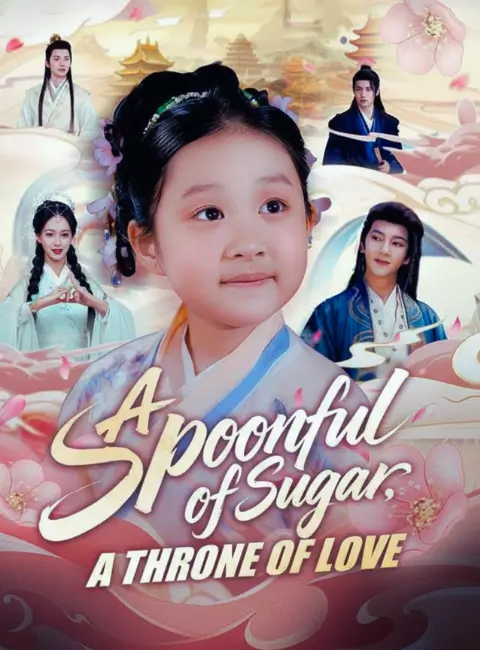
In “A Spoonful of Sugar, a Throne of Love” (2025), a 57-episode short drama streaming exclusively on Dramabox, a story of fall and redemption unfolds across the threshold between the celestial and the mortal. Lily, a Sylvan Spirit, loses everything when she fails a trial in the heavens. Her powers vanish. Her identity dissolves. She plummets to earth and becomes something she never imagined she would be: human, vulnerable, and entirely alone.
The early episodes are haunted by the weight of what she has lost. We watch her navigate a world that does not welcome her, mistreated by relatives who see only an orphan girl with no status and no future. These scenes of domestic cruelty—the cold meals, the sharper words, the door closed in her face—ache with the knowledge of who she used to be. This spirit once touched the stars. Now she sleeps in a room without warmth.
I found the series late on a night when sleep would not come, scrolling past recommendations on Dramabox. The title stopped me. “A Spoonful of Sugar, a Throne of Love” sounded like a fairy tale, and in many ways, it is. But fairy tales, as we know, have teeth. By dawn, I had watched the first twenty episodes. By the weekend, I had finished all fifty-seven. Something about Lily’s quiet endurance, and the father she would eventually fight to save, refused to let me go.
The Fall: From Spirit to Mortal
The premise arrives with the weight of myth. Lily begins as something more than human, a Sylvan Spirit connected to the ancient rhythms of the world. But the celestial trial breaks her. She fails, and failure in the heavens does not mean simply trying again. It means falling. It means becoming the very thing spirits look down upon: a mortal girl, fragile and forgettable.
Her relatives waste no time reminding her of her new place in the order of things. They mistreat her with the casual cruelty of people who sense weakness. Lily, who once commanded powers beyond their imagining, now endures their contempt in silence. There is a particular ache in watching someone who has known greatness reduced to accepting small humiliations. The series captures this ache without sentimentality. We simply watch her survive.
The Return: Brought Back to the Palace
Fate, however, has not finished with Lily. She is brought back to the palace, though not as a spirit and not as a daughter. The emperor, Lucian Nicholson, lies poisoned, his body failing, his court circling like wolves awaiting his last breath. At first, he does not see her. Why would he? She is just another face in the crowd of servants and attendants, a mortal girl with no visible use.
But Lily possesses something the palace physicians do not. She may have lost her powers, but she has not lost her knowledge. She understands what poison does to a body because she once understood the body of the world itself. When she finally reaches Lucian, when she heals him with whatever remains of her old self, the moment arrives quietly. No thunder. No celestial light. Just a girl saving a man who does not yet know she is his daughter.
The Revelation: A Father’s Devotion
“When he learned the truth, his eyes changed.” This line, spoken late in the series, captures everything that follows. Lucian, once distant, once blind to the girl who saved him, discovers that Lily is his daughter. The revelation reshapes him. The emperor who ruled an empire now finds himself ruled by a love he never expected to feel. He dotes on her devotedly, as if trying to pour three years of absence into every moment they share.
There is something deeply moving about watching a powerful man surrender to tenderness. Lucian, restored by Lily’s healing, now dedicates himself to her happiness. He gives her everything she never had: protection, warmth, a place to belong. But the shadows linger. The poison that nearly killed him did not simply disappear. It left something behind, something the physicians cannot treat and the court cannot see.
The Countdown: Three Years Left
Then comes the news that changes everything. Lucian has only three years left to live. The poison, though healed in body, has damaged something deeper. Three years. That is all they have. The father who just found his daughter must now prepare to leave her.
Lily, however, refuses to accept this timeline. The mortal girl who was once a spirit remembers what it means to fight against the inevitable. She sets out on a journey not just to save her father, but to prove that love does not surrender to clocks and calendars. Where she goes, what she sacrifices, and whether she succeeds—these questions propel the final episodes toward a conclusion that left me breathless.
My Personal Take: Why This Drama Stayed With Me
I have watched my share of short dramas. I know the tropes. I recognize the beats. But “A Spoonful of Sugar, a Throne of Love” surprised me. It surprised me in its quiet moments—Lily alone in her room, touching the face of a clock, counting the days her father has left. It surprised me in its fierce ones—Lily standing before powers she cannot yet match, demanding more time for the only person who ever truly loved her.
The actress playing Lily deserves particular mention. She carries the weight of two identities: the spirit who fell and the daughter who rose. Her eyes shift depending on who is watching. With her cruel relatives, they are flat and unreadable, a survival mechanism. With Lucian, they soften, fill with light, become the eyes of a child who has finally found safety. Watching her navigate these emotional waters across 57 episodes felt like watching someone paint with colors I did not know existed.
Lucian, too, avoids the trap of becoming a one-dimensional emperor. He is powerful, yes, but also tired. He has ruled for so long that he forgot what it felt like to be vulnerable. Lily reminds him. In their scenes together, particularly in the episodes after he learns she is his daughter, we see a man rediscovering the parts of himself he buried beneath duty and distance.
The Philosophy: Time, Love, and Sacrifice
“Time is not a river,” a minor character observes late in the series. “It is a spoonful of sugar dissolving in tea. You can watch it disappear, or you can drink it while it lasts.”
This image—the spoonful of sugar, the throne of love—haunted me long after the final episode ended. Lily spends the entire series fighting against time. She wants more of it. She wants to stretch three years into thirty, into three hundred. But the series gently suggests, without ever becoming preachy, that love’s true measure is not duration but depth. Lucian, in the time he has left, loves his daughter with an intensity that transforms them both. That transformation, the show implies, may matter more than any number of extra years.
The celestial trial that began Lily’s journey also echoes through the final episodes. She failed once. She fell once. But failure, the series reminds us, is not final. It is simply a door closing, forcing us to find another way in. Lily’s love for her father becomes her second trial, and this time, she passes not by proving her power but by proving her willingness to sacrifice everything for someone else.
The Cinematic Language: What the Eyes See
The directors at Dramabox have crafted something visually restrained yet emotionally rich. The palace sequences glow with warm light, particularly in scenes between Lily and Lucian. The rooms where her relatives mistreat her are shot in cooler tones, the colors leaching out as if the world itself refuses to witness their cruelty.
One recurring image stayed with me: Lily standing at a window, watching the sun set, knowing that each sunset brings her father closer to silence. The camera holds on her profile, the light fading across her face, and we feel the weight of those diminishing days without anyone saying a word. This is the kind of storytelling that trusts its audience to feel rather than simply understand.
Final Verdict: Is It Worth 57 Episodes?
Yes. Unequivocally yes.
“A Spoonful of Sugar, a Throne of Love” is not just another short drama about celestial beings and mortal emperors. It is a meditation on what we owe the people who love us. It is a story about falling and rising, about failure becoming the foundation for something greater, about the strange mathematics of the heart where three years can feel like forever if they are lived fully.
If you are looking for a series that will make you cry, make you hope, and leave you thinking about your own relationships long after the credits roll, stream this on Dramabox today. The 57 episodes pass like water through your hands, and when you reach the end, you will find yourself wanting more—not because the story is incomplete, but because letting go of these characters feels like saying goodbye to people you have come to love.
Lily, the spirit who became mortal, taught me something I did not know I needed to learn: that love is not about how long you have. It is about what you do with the time you are given. A spoonful of sugar, after all, can sweeten an entire cup of tea, even if the tea itself does not last forever.
⭐⭐⭐⭐½ (4.5/5 Stars) – Beautiful, heartbreaking, and absolutely unmissable.