
Table of Contents
A strange man arrives in a village. People start dying. A child changes in ways her father cannot understand. A shaman is called. A woman in white keeps appearing like a warning nobody knows how to read.
That is the surface of The Wailing. But the deeper you go, the less safe the story becomes.
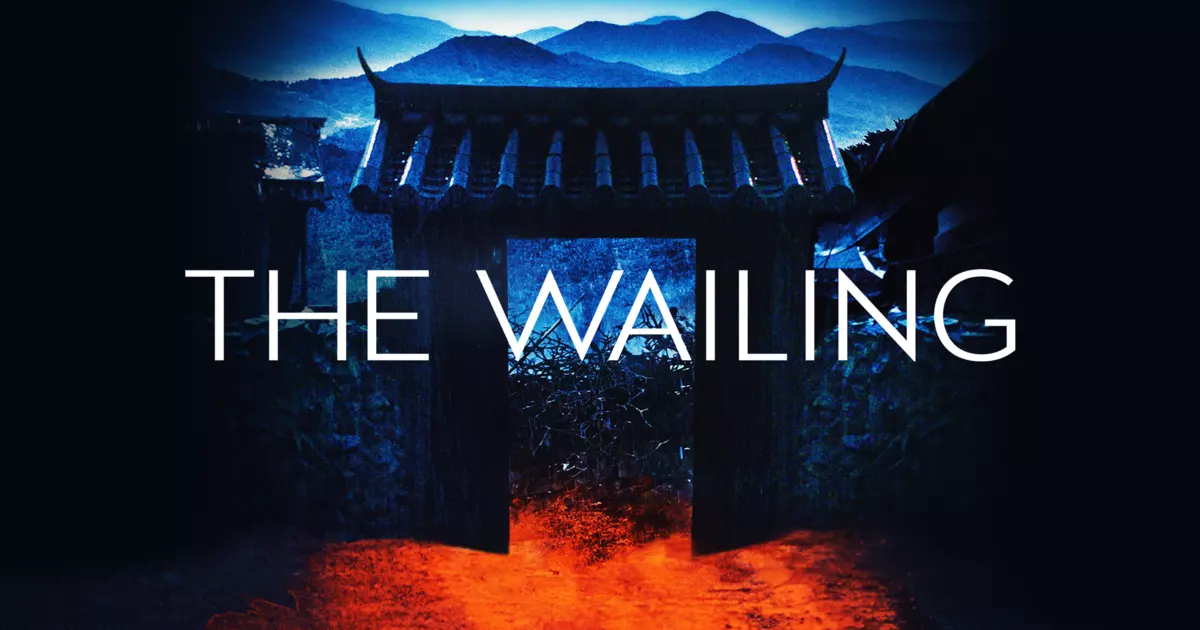
Released in 2016 and directed by Na Hong-jin, The Wailing is one of the most disturbing Korean horror movies of the last decade. It is not built like a simple ghost story or a clean possession film. It moves like a nightmare that keeps changing shape. At first, it looks like a murder mystery. Then it becomes a sickness story. Then a spiritual horror film. Then something much darker, where every answer feels like another trap.
This The Wailing review looks at why the film still feels so terrifying, why its ending continues to divide viewers, and why it deserves its place among the strongest Korean horror films ever made.
Quick Movie Details
Movie Title: The Wailing
Original Title: Gokseong
Year: 2016
Country: South Korea
Director: Na Hong-jin
Genre: Horror, Mystery, Thriller, Supernatural, Possession
Main Cast: Kwak Do-won, Hwang Jung-min, Chun Woo-hee, Jun Kunimura, Kim Hwan-hee
The Story: A Village Slowly Losing Its Mind
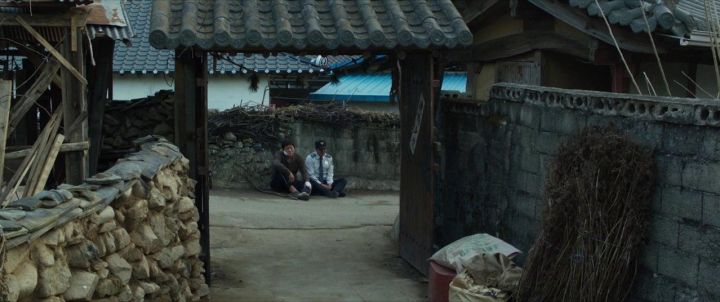
The film takes place in Gokseong, a quiet rural village where life seems ordinary until a series of violent deaths begins to shake the community. The victims are not simply murdered. They behave strangely before dying. Their bodies show signs of illness. Their families are left in shock. Nobody has a clear explanation.
Jong-goo, a local police officer, is sent to investigate. He is not the type of lead character who enters a horror story with confidence. He is clumsy, nervous, sometimes ridiculous, and often one step behind the terror unfolding around him.
At first, the deaths feel like a police matter. Maybe it is poisoning. Maybe a disease. Maybe something connected to the strange mushrooms found near the victims. But the village soon turns its attention to a mysterious Japanese man living alone in the mountains. Rumors spread. Fear grows. People begin to believe he is not just a suspect, but something evil.
Then Jong-goo’s young daughter, Hyo-jin, begins to change.
That is when the film stops being only an investigation. It becomes personal. Jong-goo is no longer trying to solve a case. He is trying to save his child from something he cannot name.
Why The Wailing Feels Different From Ordinary Horror
A lot of horror films want to give you a monster and a set of rules. Once you understand the rules, the fear becomes easier to handle.
The Wailing refuses to give you that comfort.
The movie keeps shifting the ground under your feet. Just when you think you understand who is dangerous, another scene makes you question it. The Japanese stranger looks suspicious, but is he truly the source of the evil? The woman in white appears frightening, but is she trying to help? The shaman speaks with authority, but can he be trusted?
The brilliance of the film is that it traps the viewer inside Jong-goo’s confusion. You are not watching from a safe distance. You are trying to read the signs with him, and you are just as vulnerable to being wrong.
That uncertainty is where the horror lives.
Jong-goo: A Father Out of His Depth
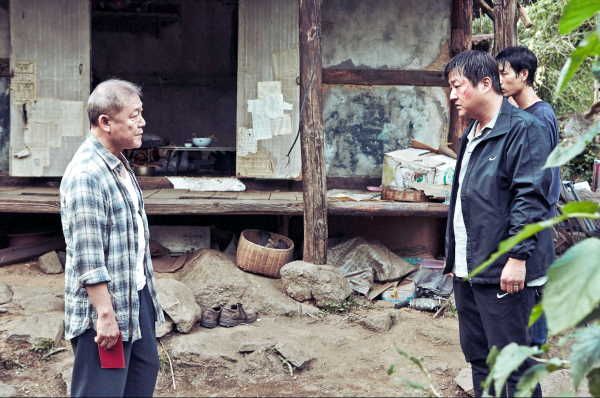
Kwak Do-won gives Jong-goo a very human kind of weakness. He is not brave in the traditional sense. He panics. He hesitates. He misunderstands things. At times, he seems almost too foolish for the situation he is facing.
But that is exactly why the character works.
Jong-goo is not a detective genius. He is an ordinary man caught in a nightmare that demands more than he can give. When the danger reaches his daughter, his fear becomes raw and painful. He wants to protect her, but he has no idea what kind of enemy he is fighting.
That helplessness gives The Wailing its emotional force. The film is scary because of demons, rituals, and disturbing images, but it is heartbreaking because of Jong-goo’s desperation. He does not fail because he does not love his daughter. He fails because love alone cannot protect her from deception.
Hyo-jin Makes the Horror Personal
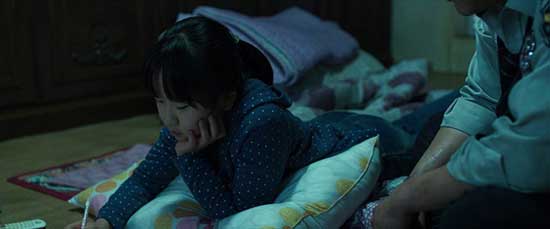
Kim Hwan-hee’s performance as Hyo-jin is one of the film’s most unsettling elements. Her transformation is frightening because it is not presented as a simple horror effect. It feels like a child being taken away piece by piece.
There are moments when she is still recognizable as Jong-goo’s daughter. Then there are moments when something else seems to look through her eyes.
The possession scenes are disturbing, but the real pain comes from the family dynamic. Jong-goo watches his child become violent, vulgar, sick, and unreachable. He cannot reason with her. He cannot comfort her. He cannot even be sure whether the girl in front of him is still his daughter.
That fear is deeply parental. The horror is not only that something evil may be inside the house. The horror is that it may already be inside the person he loves most.
The Japanese Stranger and the Power of Suspicion
Jun Kunimura’s character is one of the most mysterious figures in the movie. The villagers do not know much about him, and that lack of knowledge quickly becomes dangerous.
He is foreign. He lives separately. He appears in strange places. People whisper about him before they understand him. In a frightened community, those details are enough to turn him into a symbol of evil.
Na Hong-jin uses this tension carefully. The film plays with the fear of the outsider, but it does not let the audience feel morally superior. Viewers also become suspicious of him. We also look for signs. We also want someone to blame.
That is part of the film’s uncomfortable intelligence. It shows how fear can turn uncertainty into accusation. When people are desperate for an answer, they may accept the wrong one simply because it gives shape to their panic.
The Shaman Sequence Is Pure Nightmare Cinema
When the shaman Il-gwang enters the story, The Wailing becomes louder, stranger, and even more intense.
Played by Hwang Jung-min, Il-gwang has the energy of a man who knows exactly what he is doing. At least, that is how he appears at first. His ritual is one of the film’s most unforgettable sequences: drums, chanting, violent movement, sweat, blood, and frantic editing that makes the scene feel like a spiritual battle.
But the scene is terrifying because the viewer cannot fully understand it.
Is the ritual attacking the evil force? Is it hurting Hyo-jin? Is the shaman saving the family, or is he part of the danger? The film gives you spectacle, but not certainty.
That is what makes the sequence so powerful. It does not simply show an exorcism. It makes you feel trapped inside one, with no idea whether the person performing it is a healer or a liar.
Is The Wailing Actually Scary?
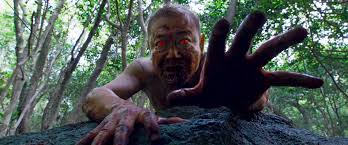
Yes, but its fear is not cheap.
The Wailing does have disturbing images, sudden violence, possession scenes, and moments of pure dread. Still, its strongest weapon is atmosphere. The film makes the entire village feel infected. The rain, the mud, the forests, the dark rooms, the empty roads — everything seems to carry a hidden threat.
The movie also understands patience. It lets scenes breathe. It allows the viewer to sit in uncertainty. Instead of rushing from one scare to another, it builds a mood of spiritual sickness.
By the time the film reaches its final act, the fear is no longer limited to what might happen next. The fear is that everything has already gone wrong, and the characters are only now realizing it.
The Village Feels Like a Character
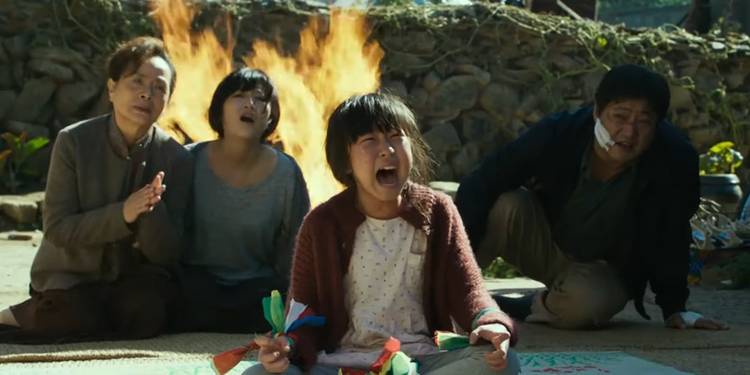
The setting is not just background. Gokseong itself feels alive with dread.
A small village should feel familiar and safe, but here it becomes claustrophobic. Everybody hears the rumors. Everybody has an opinion. Panic spreads through conversation before it becomes visible in action.
The natural environment also adds to the unease. The forest is beautiful but threatening. The rain makes everything feel heavy. The houses seem too small to contain the fear inside them. Even daylight does not feel safe.
This is one of the reasons The Wailing stays in your head. The film does not create one haunted house. It creates a haunted community.
Ending Explained: What Happens in The Wailing?
Spoiler warning: this section discusses the ending of The Wailing.
The ending of The Wailing is one of the main reasons people keep talking about the film. It does not close the story neatly. Instead, it leaves the viewer with the awful feeling that the truth was visible, but only after it was too late.
Near the end, Jong-goo meets the mysterious woman in white, Moo-myung. She tells him not to return home until the rooster crows three times. Her warning appears to be a form of protection. If he waits, the evil may be stopped.
But Jong-goo is terrified for his family. He has been lied to, confused, and pushed beyond reason. Instead of trusting her, he runs home too soon.
That decision breaks the protection.
At the same time, the film strongly suggests that the shaman Il-gwang has been working with the evil rather than against it. His reaction to Moo-myung, his behavior near the end, and the collection of victim photographs all point toward his involvement in the spreading horror.
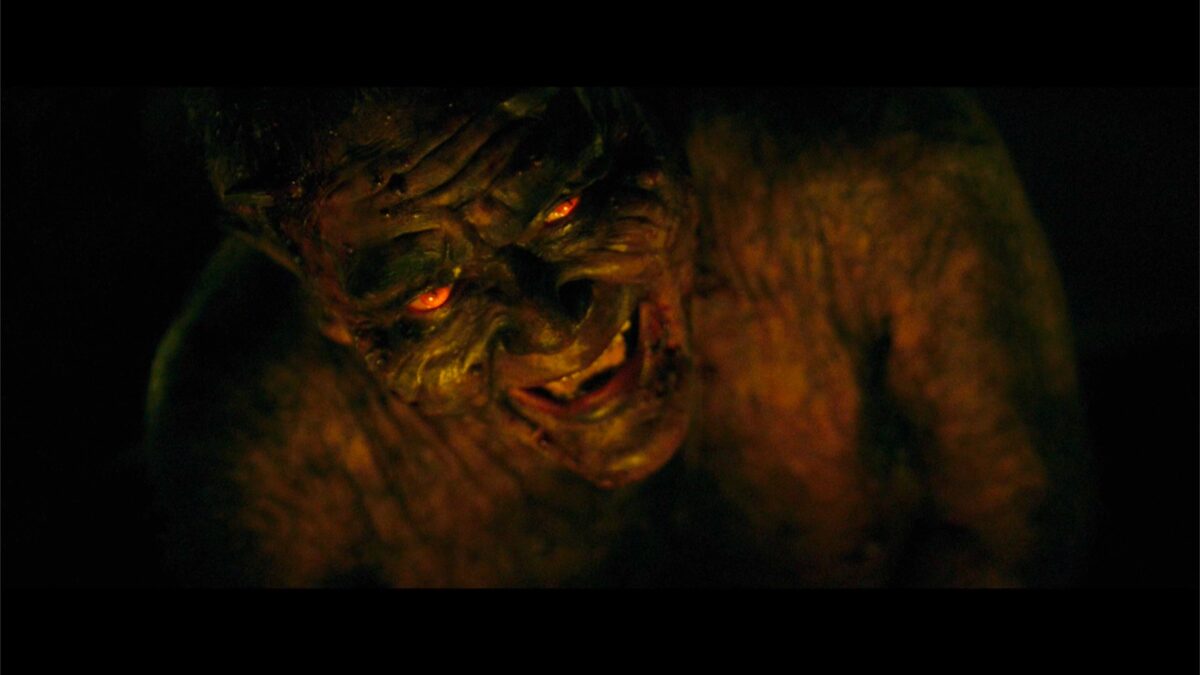
The Japanese stranger is also revealed in a demonic form, confirming that he is not merely an innocent man blamed by frightened villagers. By the time Jong-goo reaches home, the tragedy has already happened. His family is destroyed, and the evil has won.
The ending is cruel because Jong-goo’s fatal mistake comes from love. He wants to protect his daughter. But in this story, love without trust and clarity becomes another tool the evil can use.
Who Is the Woman in White?
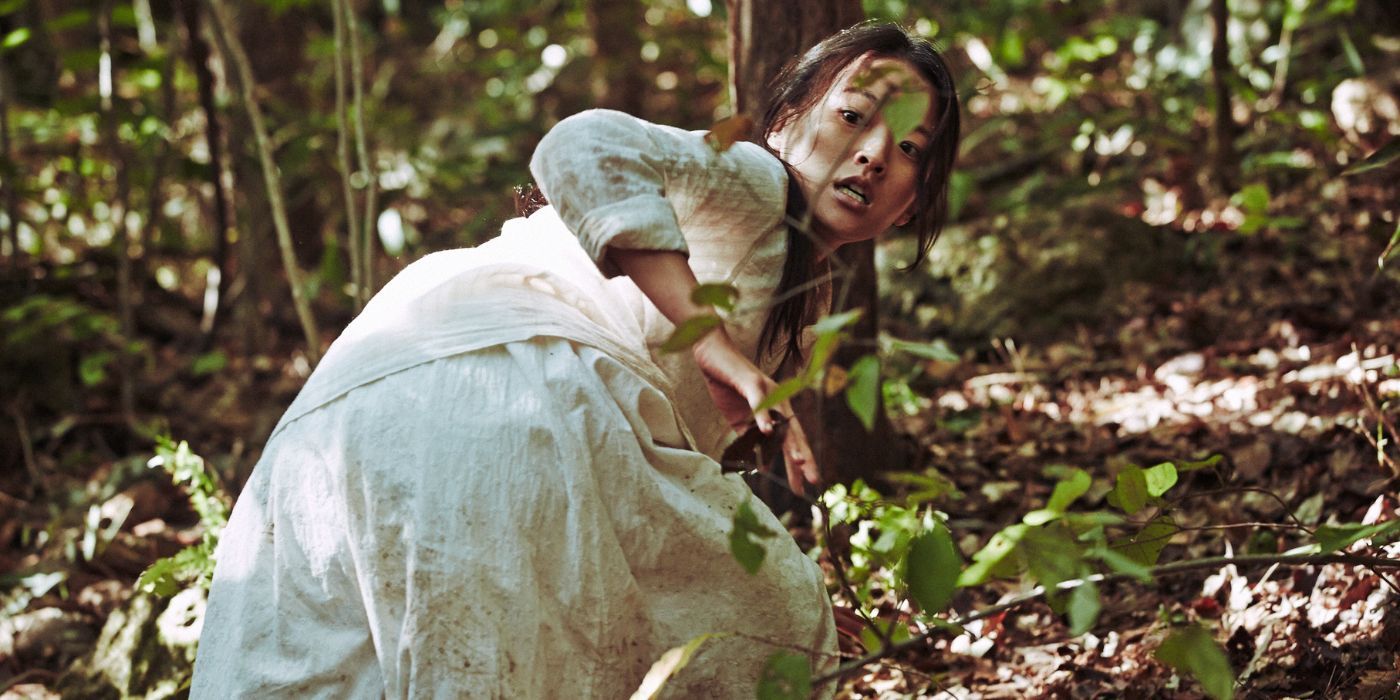
Moo-myung is one of the most important and mysterious characters in The Wailing. She appears throughout the film like a strange warning, never fully explaining herself in a way Jong-goo can easily accept.
Many viewers see her as a protective spirit or guardian of the village. She seems to oppose the evil force and tries to stop Jong-goo from making the final mistake.
The tragedy is that she does not look comforting. She does not behave like the kind of savior Jong-goo expects. Because he cannot understand her, he cannot trust her.
That idea is one of the film’s sharpest points. Truth does not always arrive in a form we recognize. Sometimes the warning looks strange, while the danger speaks with confidence.
Why the Ending Hurts So Much
The ending is devastating because Jong-goo is not a bad father. He is not selfish. He is not careless. He is simply overwhelmed.
He is given too many signs and not enough certainty. Every person around him seems suspicious. Every explanation feels incomplete. Every second matters. Under that pressure, he chooses action over patience.
And that choice destroys him.
The Wailing understands something very frightening about evil: it does not always need to overpower people. Sometimes it only needs to confuse them long enough for them to make the wrong decision.
That is why the final stretch feels so hopeless. Jong-goo loses not because he stops fighting, but because he never truly knows where to aim.
Main Themes in The Wailing
The film works because it is not only about possession. It is about the emotional and social damage caused by fear.
Faith and doubt are everywhere in the story. Characters turn to police work, rumor, religion, and ritual, but none of them provides complete safety.
Parental fear drives the emotional core. Jong-goo’s terror comes from watching his daughter suffer while being powerless to save her.
Suspicion of outsiders shapes the village’s reaction to the Japanese stranger. The film shows how quickly fear can become accusation.
Deception is the engine of the plot. Almost every major figure is difficult to read, and the wrong interpretation can be fatal.
Evil as confusion may be the film’s strongest theme. Evil wins by making truth look false and lies look believable.
These themes make The Wailing more than a frightening movie. They make it a deeply uncomfortable experience about human weakness under pressure.
Why The Wailing Matters in Korean Horror
The Wailing deserves its reputation as one of the best Korean horror movies because it pushes the genre beyond simple scares. It combines police mystery, folk horror, possession cinema, religious fear, and family tragedy without making the result feel mechanical.
Compared with Train to Busan, it is slower and more spiritually disturbing. Compared with A Tale of Two Sisters, it is less elegant but more chaotic and punishing. Compared with I Saw the Devil, it is not about revenge, but about a form of evil that feels older and harder to understand.
The film is long, but the length matters. It gives the dread time to spread. By the end, the viewer feels exhausted in the same way the characters do.
That is rare in horror. Many films scare you and let you leave. The Wailing follows you out.
Should You Watch The Wailing?
Yes, especially if you like horror that leaves room for interpretation.
This is not a casual popcorn horror movie. It is slow, heavy, strange, and emotionally draining. It asks you to pay attention, and it does not reward you with easy comfort. But if you enjoy supernatural mysteries, possession stories, ambiguous endings, and dark Korean cinema, The Wailing is essential.
It is the kind of film that becomes more interesting the longer you think about it. You may finish it confused. You may even feel frustrated. But that reaction is part of the experience.
The movie does not want you to walk away relaxed. It wants you to wonder whether you trusted the wrong person.
Similar Movies to Watch After The Wailing
If you enjoyed The Wailing, these films are strong follow-ups:
A Tale of Two Sisters — a psychological Korean horror classic about grief, memory, and family trauma.
Train to Busan — a faster and more emotional Korean horror film built around survival and sacrifice.
I Saw the Devil — a brutal Korean thriller about revenge, evil, and moral collapse.
The Host — a monster movie with family drama, social commentary, and Bong Joon Ho’s sharp genre style.
The Medium — a possession horror film with shamanic rituals and spiritual dread.
FAQ About The Wailing
Is The Wailing a horror movie?
Yes. The Wailing is a Korean horror movie that blends supernatural horror, mystery, thriller, possession, and religious dread.
Is The Wailing very scary?
Yes. It is scary because of its atmosphere, disturbing imagery, possession scenes, and constant uncertainty about who can be trusted.
What is The Wailing really about?
At its core, The Wailing is about fear, deception, faith, and a father’s helpless attempt to save his daughter from an evil he cannot understand.
Is The Wailing confusing?
Yes, but intentionally. The film is designed to make viewers question every character and every explanation until the ending reveals how dangerous that confusion really was.
Is The Wailing worth watching?
Yes. The Wailing is one of the most powerful Korean horror films of the 2010s and a must-watch for fans of slow-burn supernatural horror.