
Table of Contents
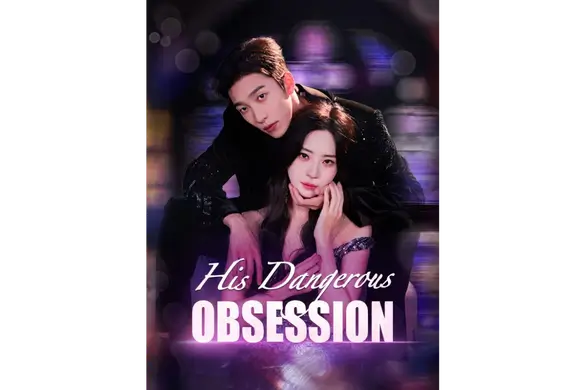
His Dangerous Obsession does not flirt with danger; it throws the viewer straight into it. This Dramabox short drama opens like a storm-soaked thriller and quickly reveals itself as something even more unsettling: a toxic love story built on fear, power, and emotional devastation. Instead of offering a comforting fantasy, it asks whether obsession can ever be mistaken for love when the man fixated on the heroine is also the one who traps her at the worst possible moment of her life. Dark, volatile, and deliberately uncomfortable, this is a romance designed to keep viewers tense rather than reassured.
His Dangerous Obsession review: when dark romance becomes psychological combat
There is nothing soft around the edges here. His Dangerous Obsession review conversations will inevitably circle the same question: how far can a drama push a possessive anti-hero before the story stops feeling romantic and starts feeling monstrous? This series knows exactly where that line is, and instead of stepping back from it, it stares directly at it.
The setup is immediate and visually charged. Austin Gorman, the second son of a powerful and corrupt family, is introduced in crisis rather than luxury. He is cornered, bleeding, and surrounded by men pressuring him to surrender his power. The early scenes establish him not as a polished fantasy boyfriend, but as a brutal survivor shaped by a vicious environment. Even before Diane Hoover enters the frame, the show makes one thing clear: Austin belongs to a world where coercion is ordinary and mercy is rare.
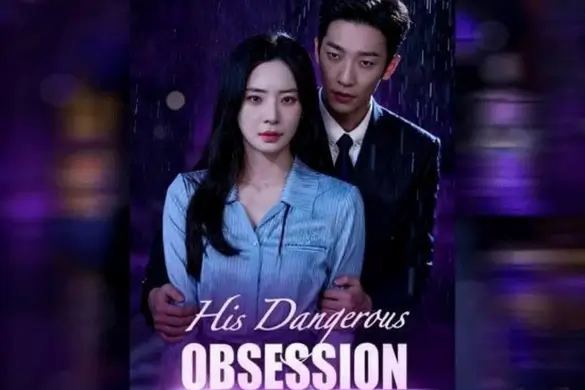
That matters, because when he collides with Diane in the rain, the scene is not presented as charming fate. It is invasive, frightening, and charged with instability. He corners her to hide from danger. She should run. Instead, she notices his injury and treats it. That small act of care becomes the emotional trigger for everything that follows. In a healthier story, kindness might open the door to connection. Here, it opens the door to fixation.
A meet-cute twisted into a threat
One of the sharpest things this His Dangerous Obsession Dramabox story does is corrupt the language of romance on purpose. The drama borrows familiar genre imagery—close physical proximity, charged eye contact, a whispered confession—and poisons it. Austin’s attraction is immediate, but it is not gentle, and the series never frames it as harmless intensity. He is captivated by Diane because she gives him something he has not received in a long time: uncalculated human concern. Yet what he does with that feeling is what defines the show’s darkness.
He does not pursue her with restraint. He orders her found.
That choice is where the drama’s identity becomes fully visible. This is not merely a psychological thriller romance with a difficult male lead. It is a story about obsession vs love, and it understands that the difference lies in whether the beloved person remains free. Diane’s kindness does not make Austin better. It gives his hunger a face.
When the story moves to the research institute and reveals that Diane works under the authority of the Gorman family business, the tension sharpens into something uglier. The imbalance is no longer emotional alone. It becomes structural. Austin has money, status, and control. Diane has intelligence, professional dignity, and a refusal to bend. Her rejection of his interest is not melodramatic; it is necessary self-protection. She sees what he is immediately. More importantly, she says no without hesitation.
That refusal is one of the best foundations of the series. Diane is not written as passive prey. She is the only person in Austin’s orbit who does not seem impressed by power, and that resistance makes her both compelling and vulnerable.
Diane Hoover is the emotional center of the tragedy
For all the talk this His Dangerous Obsession short drama will generate around Austin Gorman, the series works because Diane Hoover gives it moral clarity. Without her, the show would risk becoming an exercise in stylish cruelty. With her, it becomes a story about survival, trauma, and the beginnings of revenge.
The turning point is devastating because it attacks her from several directions at once. While Austin’s older brother drunkenly causes the crash that destroys Diane’s family, Austin takes Diane captive. The cross-cutting between those two threads is where the drama becomes especially cruel in design. One branch of the Gorman family causes the catastrophe. Another prevents Diane from responding to it. Whether Austin knows the full scale of the harm at that point almost becomes secondary to the emotional reality of it: she is restrained, powerless, and kept from her dying family.
That is the moment that hardens the drama into a true tragic love story rather than a provocative fantasy with sharp edges. Whatever fascination exists between them is now buried beneath something far more serious. Austin may be drawn to Diane, but the story leaves no confusion about the damage he causes. His wealth, his fixation, and his self-justifying desire become instruments of violation.
Diane’s reaction is exactly what the material needs. She does not melt, rationalize, or soften the horror of what happened. She rejects the premise entirely. She names his offer for what it is: not love, but transaction. Not devotion, but possession. That resistance gives the series its backbone.
Austin Gorman, the anti-hero who cannot be romanticized away
Austin is the kind of morally grey male lead that makes viewers argue, and the show plainly knows it. He is wounded, dangerous, magnetic, and deeply warped by the family that produced him. But the writing is strongest when it does not ask the audience to excuse him simply because he is damaged.
As a possessive anti-hero, Austin works because the series presents his obsession as both seductive and alarming. He is visually framed like the center of a dark fantasy—elegant, composed, almost painfully controlled—yet his actions keep exposing the rot beneath the image. He does not merely want Diane near him. He wants to define the terms of her existence. That is what makes this a true toxic relationship drama, not just an intense romance with a difficult personality at its center.
There is also an interesting contradiction in him. He is one more victim of the Gorman family’s corruption, but he is also one of its most dangerous products. The same system that brutalized him taught him to confuse desire with entitlement. Diane becomes the one person he believes is pure in his tainted world, but he immediately tries to cage what he admires. The tragedy of Austin is not that he loves badly. It is that he does not seem to understand that control destroys the very thing he claims to cherish.
That contradiction is what keeps the series watchable. Not because it redeems him, but because it creates narrative pressure. If Austin eventually turns his rage against the family conspiracy surrounding Diane’s loss, that will not erase what he has done. It will only deepen the conflict.
The Gorman family gives the story its real scale
A weaker drama might have left the conflict at the level of one obsessive man and one trapped woman. This series goes wider. The Gorman family is not background decoration; it is the machine generating nearly every form of harm in the story.
The brother is reckless and lethal. The father is a fixer who treats catastrophe as something wealth can absorb. Together they create the framework for the show’s larger corrupt family drama. That matters because Diane’s struggle is not only romantic or personal. It is judicial, moral, and systemic. She is not simply resisting Austin’s fixation. She is standing against a family structure that believes power should erase consequences.
That broader frame gives the series a female lead revenge arc with real potential. Diane is not trapped in a love triangle of emotions. She is moving toward war with a dynasty. Austin may see himself as set apart from the family, but for Diane, blood still binds them. The man who held her captive and the man whose actions killed her family belong to the same poisoned house. That is the impossible knot at the center of the drama.
Why this binge-worthy short drama is so hard to quit
This binge-worthy short drama succeeds for the same reason many viewers will probably argue with themselves while watching it: it is emotionally difficult, but structurally compulsive. The 68-episode format suits material like this because the story thrives on escalation, confrontation, and revelation in concentrated bursts. Each movement pushes the central question forward without diffusing the tension.
It also helps that the drama understands its own visual language. The noir-inspired lighting, heavy shadows, rain-drenched action, and polished interiors all support the mood of a world where beauty and menace are inseparable. This is not a bright melodrama pretending to be dark. It looks dark, moves dark, and thinks dark.
Most importantly, the series understands the uneasy appeal of the red flag romance genre without pretending that appeal equals innocence. Viewers are not drawn in because the relationship is healthy. They are drawn in because the story is asking whether anything meaningful can emerge from circumstances this ruined. That tension between fascination and moral recoil is the engine of the drama.
His Dangerous Obsession is best approached as a noir-leaning Dramabox drama about captivity, grief, and the violent confusion between need and love. It is not a comforting romance, and it does not soften the ugliness of its premise. What it offers instead is a dark, emotionally charged ride built around a sharp heroine, a deeply damaged anti-hero, and a family conspiracy that turns personal trauma into a larger battle for justice. This is for viewers who like their dark romance tense, morally messy, and openly provocative—especially anyone drawn to revenge romance, psychological pressure, and short-form dramas that make obsession feel dangerous rather than glamorous.
★★★★☆ 4/5

4 comments
[…] it becomes the engine for a deeply satisfying comeback story—one built on hidden power, social revenge, and the quiet thrill of watching a woman who has been underestimated for far too long take the […]
[…] private space, one moment of curiosity that cannot be taken back. That is what gives this DramaBox romance its pull from the start. It is not selling a soft fantasy or a comforting workplace love story. It […]
[…] and structurally, the series keeps the contrast between vulnerability and power clear. The hospital romance drama atmosphere is intimate and fragile, while the corporate settings emphasize distance, control, […]
[…] The reborn woman drama angle works best in these moments because the past is not erased. It is weaponized. She remembers the lies, the fake concern, the emotional traps. So when she meets those same faces again, the tension does not depend on surprise. It depends on endurance. Can she stay calm while standing beside the people who once destroyed her life? In many scenes, that question is more gripping than the revenge itself. […]