
Table of Contents
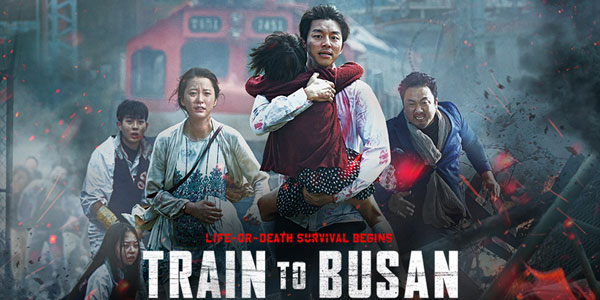
Some zombie movies are built only for panic. They throw bodies at the screen, turn the volume up, and hope the chaos is enough. Train to Busan does something much smarter. It gives you the panic, yes, but it also gives you people worth worrying about.
Released in 2016, Train to Busan quickly became one of the most talked-about Korean horror films in the world. It is fast, emotional, violent, and surprisingly human. On the surface, it is a zombie outbreak movie set mostly on a moving train. Underneath, it is a story about fatherhood, selfishness, sacrifice, and what people become when survival is the only thing left.
That combination is what makes Train to Busan so unforgettable. It is not just one of the best Korean zombie movies. It is one of the rare horror films that can make your heart race and break it at the same time.
Quick Movie Details
Movie Title: Train to Busan
Original Title: Busanhaeng
Year: 2016
Country: South Korea
Director: Yeon Sang-ho
Genre: Horror, Zombie, Action, Thriller, Drama
Main Cast: Gong Yoo, Jung Yu-mi, Ma Dong-seok, Kim Su-an, Choi Woo-shik, Ahn So-hee, Kim Eui-sung
What Is Train to Busan About?
Train to Busan follows Seok-woo, a busy fund manager and divorced father who is emotionally distant from his young daughter, Su-an. She wants to visit her mother in Busan for her birthday, and although Seok-woo is clearly more comfortable with work than parenting, he agrees to take her.
At first, the journey seems ordinary. Passengers board the train. People find their seats. A few small tensions appear between strangers. Then one infected woman slips onto the train, and everything changes.
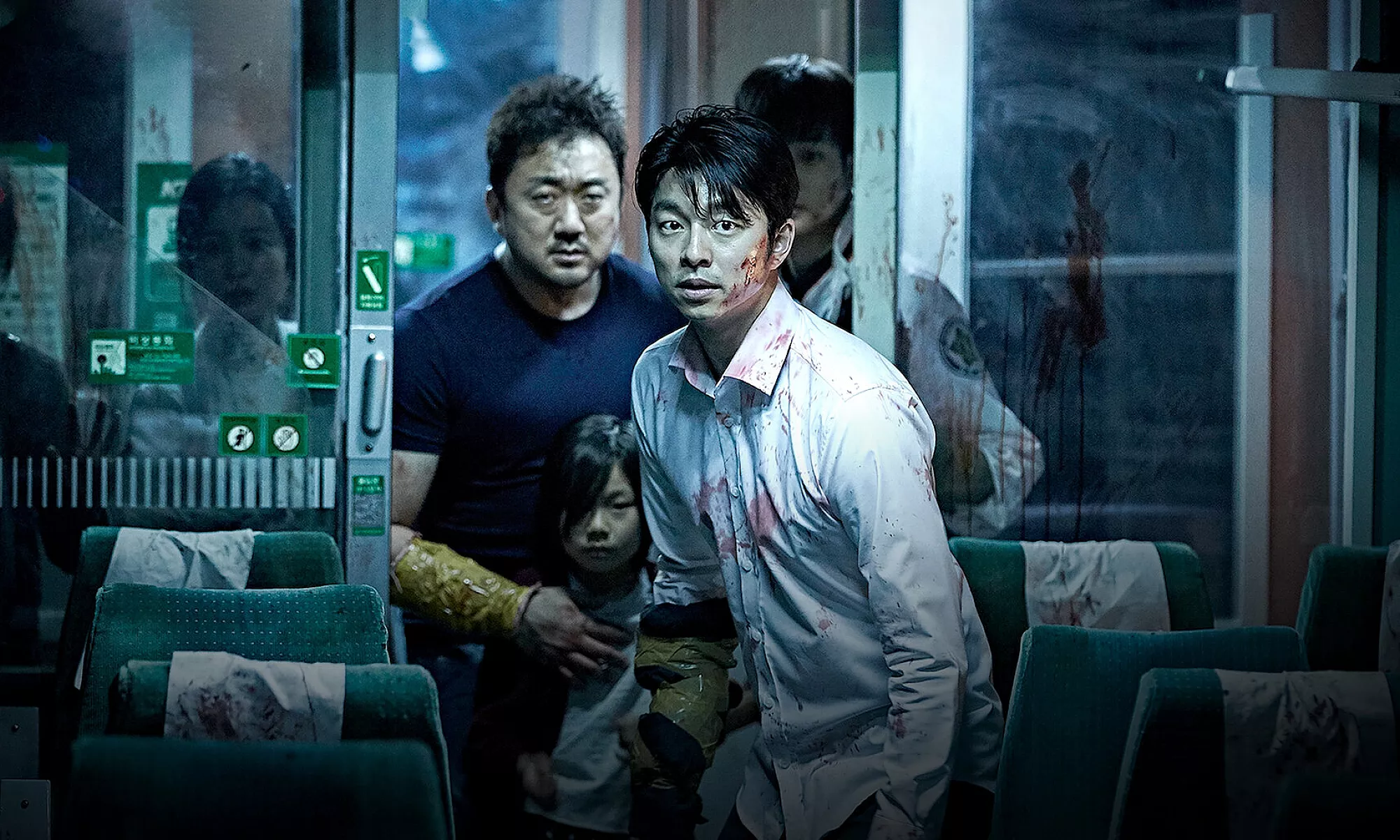
The zombie outbreak spreads quickly from one carriage to another. Passengers are trapped inside a high-speed train while the country outside collapses into chaos. With nowhere to run and very little time to think, the survivors must fight their way through infected crowds, locked doors, selfish passengers, and their own fear.
It is a simple setup, but that is exactly why it works so well.
Why Train to Busan Still Works

The strongest thing about Train to Busan is its pacing. The movie barely wastes a scene. Once the outbreak begins, the tension keeps moving forward, just like the train itself.
But speed alone is not enough to make a film memorable. What gives Train to Busan its power is the emotional structure underneath the action. Every major character has a clear role, and most of them feel recognizable. There is the tired father, the frightened child, the pregnant wife, the tough husband, the selfish businessman, the high school students, and the elderly sisters.
They are not deeply complicated characters, but they do not need to be. The film gives them enough personality and emotion for the audience to care when danger reaches them.
That is where many zombie movies fail. They create bodies, not people. Train to Busan creates people first, then puts them in danger.
Gong Yoo Gives the Film Its Emotional Core
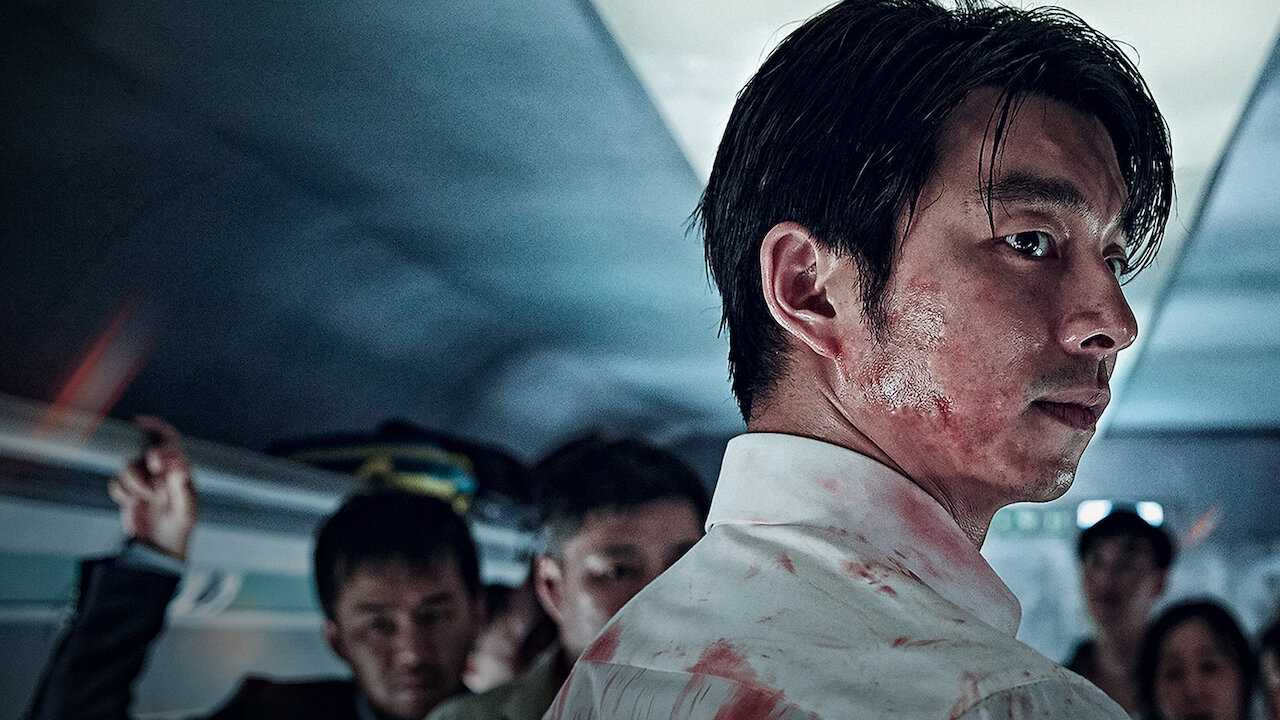
Gong Yoo’s performance as Seok-woo is one of the main reasons the film lands so well. At the beginning, Seok-woo is not presented as a terrible man, but he is clearly absent in the ways that matter. He provides for his daughter, but he does not truly listen to her. He knows how to work, but he does not know how to connect.
That makes his journey more meaningful. The zombie outbreak forces him into a situation where money, status, and professional success mean nothing. The only thing that matters is whether he can protect his daughter and become the father she needs before it is too late.
His transformation is not loud or overly sentimental. It happens through choices. At first, he thinks like a man trained to survive alone. Slowly, painfully, he begins to understand that survival without humanity is not worth much.
Ma Dong-seok Nearly Steals the Movie
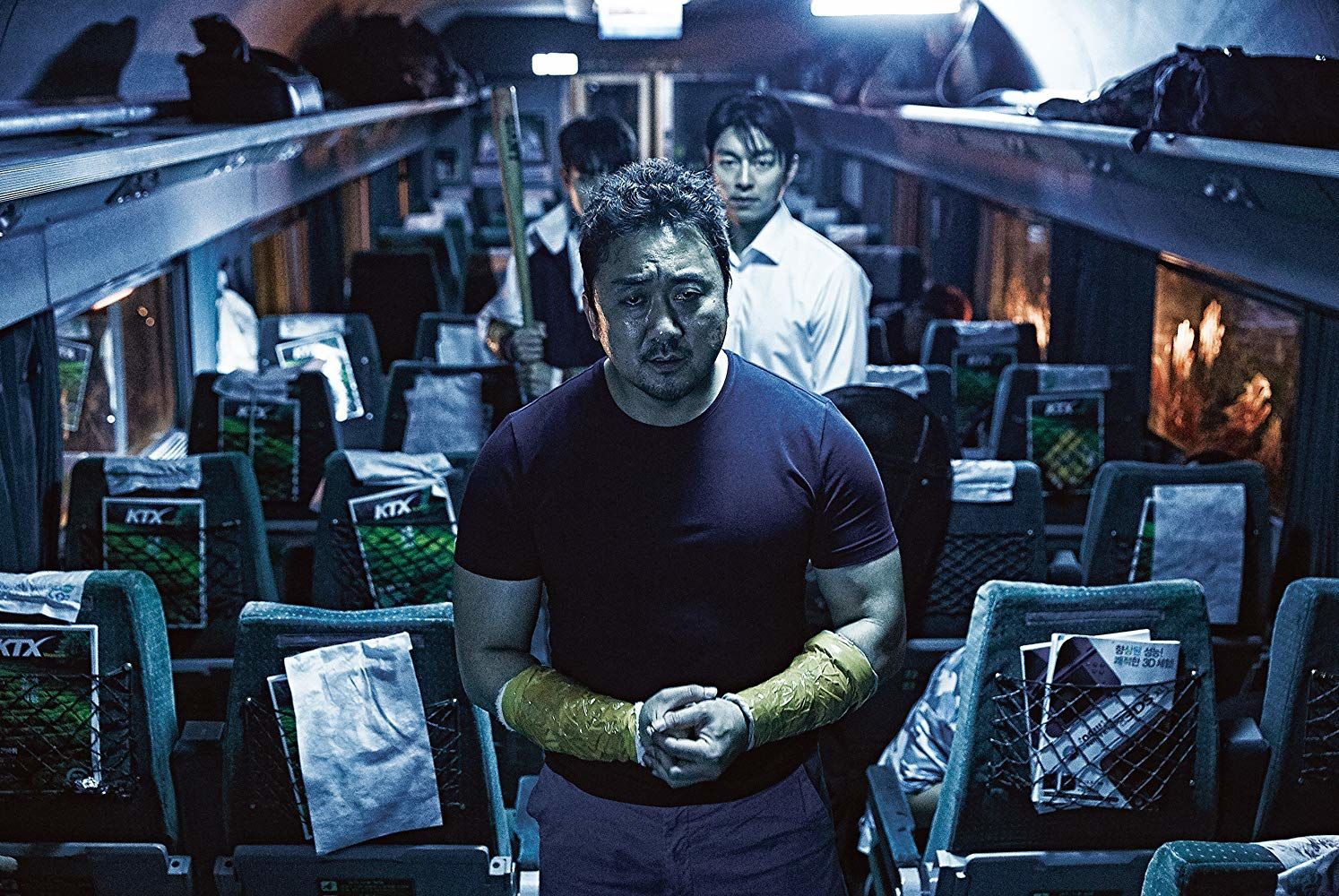
If Gong Yoo gives the film its heart, Ma Dong-seok gives it muscle and warmth.
His character, Sang-hwa, is one of the most loved parts of Train to Busan. He is tough, funny, direct, and fiercely protective of his pregnant wife. In a weaker movie, he could have been written as just the strong guy who punches zombies. Here, he becomes much more than that.
Sang-hwa represents courage without ego. He is brave, but not because he wants to look heroic. He acts because someone has to. His presence also creates an important contrast with Seok-woo. While Seok-woo begins the film cautious and self-interested, Sang-hwa is already willing to risk himself for others.
That contrast helps push Seok-woo toward change.
The Train Setting Is Perfect for Horror
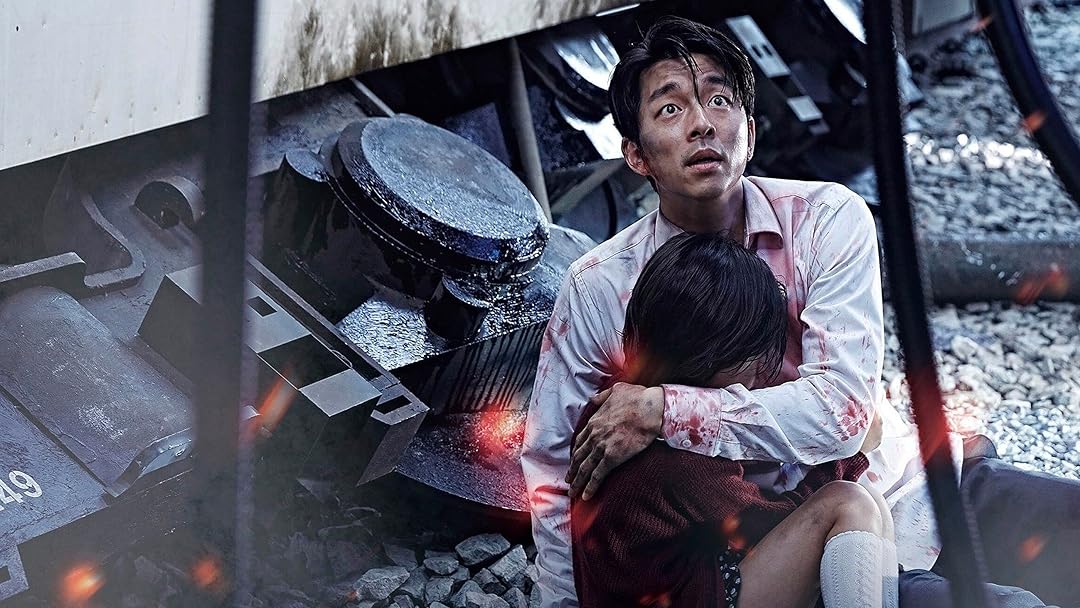
A train is one of the best settings for a zombie movie because it creates movement and confinement at the same time. The characters are traveling fast, but they are trapped. They are technically going somewhere, but they cannot truly escape.
Each carriage becomes its own little battlefield. The narrow aisles make every zombie attack feel more intense. Doors become temporary lifelines. Windows show glimpses of a world falling apart. Even silence becomes frightening because you know the infected may be only one carriage away.
The movie uses this setting brilliantly. It turns the train into a pressure cooker where fear, selfishness, bravery, and panic all collide.
The Zombies Are Terrifying Because They Move Fast
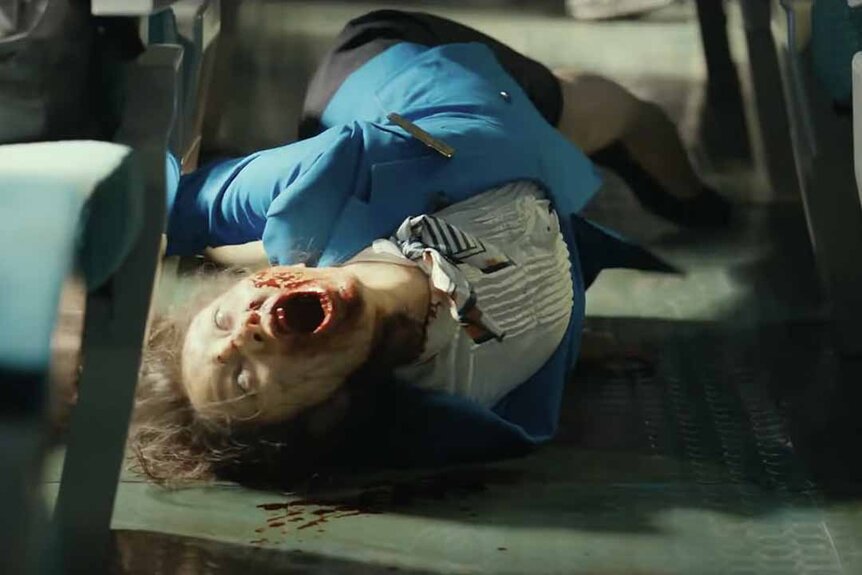
The zombies in Train to Busan are not slow, rotting figures dragging themselves forward. They are fast, aggressive, and violent. Once they see a living person, they attack with terrifying speed.
This gives the action scenes a frantic energy. The infected do not just scare the characters; they overwhelm them. One mistake can destroy an entire carriage. One opened door can change everything.
But the film also adds small rules that make the survival sequences more interesting. The infected react strongly to sight and sound, which allows the characters to improvise. These details help create suspense instead of relying only on chaos.
The Real Horror Is Human Selfishness
Like many great Korean genre films, Train to Busan is not only interested in the monster. It is also interested in society.
The zombies are terrifying, but some of the human decisions are even harder to watch. As the outbreak worsens, the passengers begin dividing themselves between those who help and those who protect only themselves. Fear exposes character very quickly.
The most obvious example is Yong-suk, the selfish businessman who repeatedly puts others in danger to save himself. He is not infected, but his actions are monstrous in a different way. Through him, the film makes a sharp point: in a crisis, selfishness can spread almost as dangerously as a virus.
That is one reason the movie feels bigger than a simple zombie thriller. It is about what happens when public trust collapses and people stop seeing each other as human.
Is Train to Busan Scary?
Yes, but not only in the usual horror way.
There are intense zombie attacks, violent transformations, and several scenes where the characters are trapped in impossible situations. The movie is suspenseful from the moment the outbreak begins, and it rarely lets the audience relax for long.
But the scariest part of Train to Busan is emotional. You are not just afraid of the zombies. You are afraid of losing characters you care about. You are afraid of watching good people make sacrifices. You are afraid that the cruelest person in the room might survive longer than the kindest one.
That emotional fear is what separates the movie from many ordinary zombie films.
Ending Explained: What Happens at the End of Train to Busan?
Spoiler warning: this section discusses the ending of Train to Busan.
Near the end of the film, Seok-woo, Su-an, and Seong-kyeong make it onto the final train car after surviving one nightmare after another. Unfortunately, Yong-suk has also survived, and by this point, his selfishness has caused multiple deaths.
After being bitten, Yong-suk attacks Seok-woo. Seok-woo manages to save Su-an and Seong-kyeong, but he is bitten in the process. He realizes he has only a short time before turning into a zombie.
The final moments between Seok-woo and Su-an are devastating. He leaves her behind not because he wants to, but because it is the only way to keep her safe. His last memory is of her birth, a quiet reminder that beneath all his mistakes, he did love his daughter.
Su-an and Seong-kyeong eventually reach a military blockade. At first, soldiers nearly mistake them for infected people. What saves them is Su-an singing the song she had wanted to perform for her father earlier in the film.
That ending works because it brings the emotional story full circle. Seok-woo begins the film as a father who fails to truly hear his daughter. By the end, her voice becomes the reason she survives.
Why the Ending Hurts So Much
The ending of Train to Busan is painful because it feels earned. The film does not kill Seok-woo only for shock value. His death completes his character arc.
At the start, he tells Su-an that people should look after themselves. By the end, he proves the opposite. He gives everything so she can live.
That sacrifice is why the movie stays with viewers. It is not just sad because a father dies. It is sad because he finally becomes the father his daughter needed, and then he has to leave her.
Few zombie movies manage to deliver that kind of emotional punch.
Themes in Train to Busan
One of the reasons Train to Busan became so popular is that its themes are easy to understand but still powerful.
The film explores:
Parenthood: Seok-woo’s journey is about learning how to love through action, not just responsibility.
Sacrifice: The best characters in the film are often the ones willing to protect others.
Class and selfishness: The movie criticizes people who value their own safety and status above everyone else.
Social collapse: The outbreak reveals how quickly order can disappear when fear takes over.
Humanity during crisis: The film asks whether survival matters if people lose their compassion along the way.
These themes give the movie a deeper emotional weight than many zombie thrillers.
Train to Busan and Korean Horror Cinema
Train to Busan helped introduce many international viewers to Korean horror and Korean genre cinema. For some audiences, it was their first major Korean horror experience. For others, it became a gateway to films like The Wailing, A Tale of Two Sisters, The Host, and I Saw the Devil.
It also proved that a zombie movie could be both commercially exciting and emotionally serious. The film has action, horror, and spectacle, but it never forgets the people at the center of the story.
That is why it deserves a place among the best Korean horror movies.
Should You Watch Train to Busan?
Yes, absolutely.
Even if you are not usually a fan of zombie movies, Train to Busan is worth watching because it is not only about zombies. It is about family, fear, sacrifice, and the choices people make when there is no easy way out.
It is intense without feeling empty. Emotional without becoming cheesy. Fast without losing control of its characters.
For horror fans, it is essential. For Korean cinema fans, it is a must-watch. For anyone who wants a thriller with real heart, Train to Busan is one of the strongest choices you can make.
Similar Movies to Watch After Train to Busan
If you enjoyed Train to Busan, you may also like:
The Wailing — for a darker, slower Korean horror mystery filled with dread and spiritual fear.
The Host — for another Korean monster movie that mixes family drama, satire, and creature horror.
Seoul Station — an animated prequel connected to the world of Train to Busan.
A Tale of Two Sisters — for a more psychological and tragic Korean horror classic.
I Saw the Devil — for viewers who want something more brutal, violent, and revenge-driven.
FAQ About Train to Busan
Is Train to Busan a horror movie?
Yes. Train to Busan is a Korean horror movie, but it also works as an action thriller, survival drama, and emotional family story.
Is Train to Busan very scary?
It is intense and suspenseful, especially during the zombie attack scenes. However, the emotional drama is just as powerful as the horror.
Why is Train to Busan so popular?
Train to Busan became popular because it combines fast zombie action with strong characters, emotional storytelling, and a heartbreaking father-daughter relationship.
Is Train to Busan worth watching?
Yes. It is one of the best Korean zombie movies and one of the most accessible Korean horror films for international viewers.
What makes Train to Busan different from other zombie movies?
The film stands out because of its train setting, emotional character arcs, social commentary, and the way it mixes action with genuine heartbreak.

1 comment
[…] Train to Busan — for a more emotional and action-packed Korean horror experience. […]