
Table of Contents
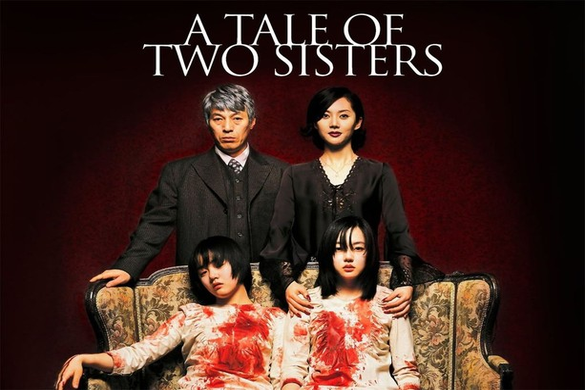
Some horror movies scare you while you are watching them. A Tale of Two Sisters waits until later.
It follows you quietly. It stays in the corners of your memory. You may forget one scene, then suddenly remember a hallway, a wardrobe, a dinner table, a face in the dark, and that heavy feeling that something inside the house was wrong from the beginning.
Released in 2003 and directed by Kim Jee-woon, A Tale of Two Sisters is one of the most famous Korean horror movies ever made. But its reputation does not come only from frightening scenes. The film is scary, yes, but it is also sad, elegant, confusing, and emotionally cruel in a way that makes it difficult to shake off.
This is not a horror movie that explains itself quickly. It asks you to sit with silence, broken memories, family tension, and the feeling that grief can become its own kind of ghost.
Quick Movie Details
Movie Title: A Tale of Two Sisters
Original Title: Janghwa, Hongryeon
Year: 2003
Country: South Korea
Director: Kim Jee-woon
Genre: Psychological Horror, Supernatural Horror, Mystery, Drama
Main Cast: Im Soo-jung, Moon Geun-young, Yum Jung-ah, Kim Kap-soo
What Is A Tale of Two Sisters About?

A Tale of Two Sisters follows Su-mi and Su-yeon, two sisters who return home after spending time in a mental institution. Their family home is large, beautiful, and deeply unsettling. Their father is quiet and emotionally distant. Their stepmother, Eun-joo, is cold, controlling, and openly hostile toward the girls.
At first, the story feels like a traditional haunted-house movie. Strange noises echo through the rooms. Shadows move where they should not. The sisters seem afraid, but not only of ghosts. Something is wrong in the family itself.
The more time Su-mi spends inside the house, the more reality begins to break apart. Memories do not feel stable. Conversations seem loaded with hidden meaning. The stepmother’s cruelty becomes harder to read. Is she truly evil? Is the house haunted? Are the sisters being punished by the past? Or is the real horror buried somewhere inside Su-mi’s mind?
That uncertainty is what gives the film its power.
Why This Korean Horror Classic Still Works
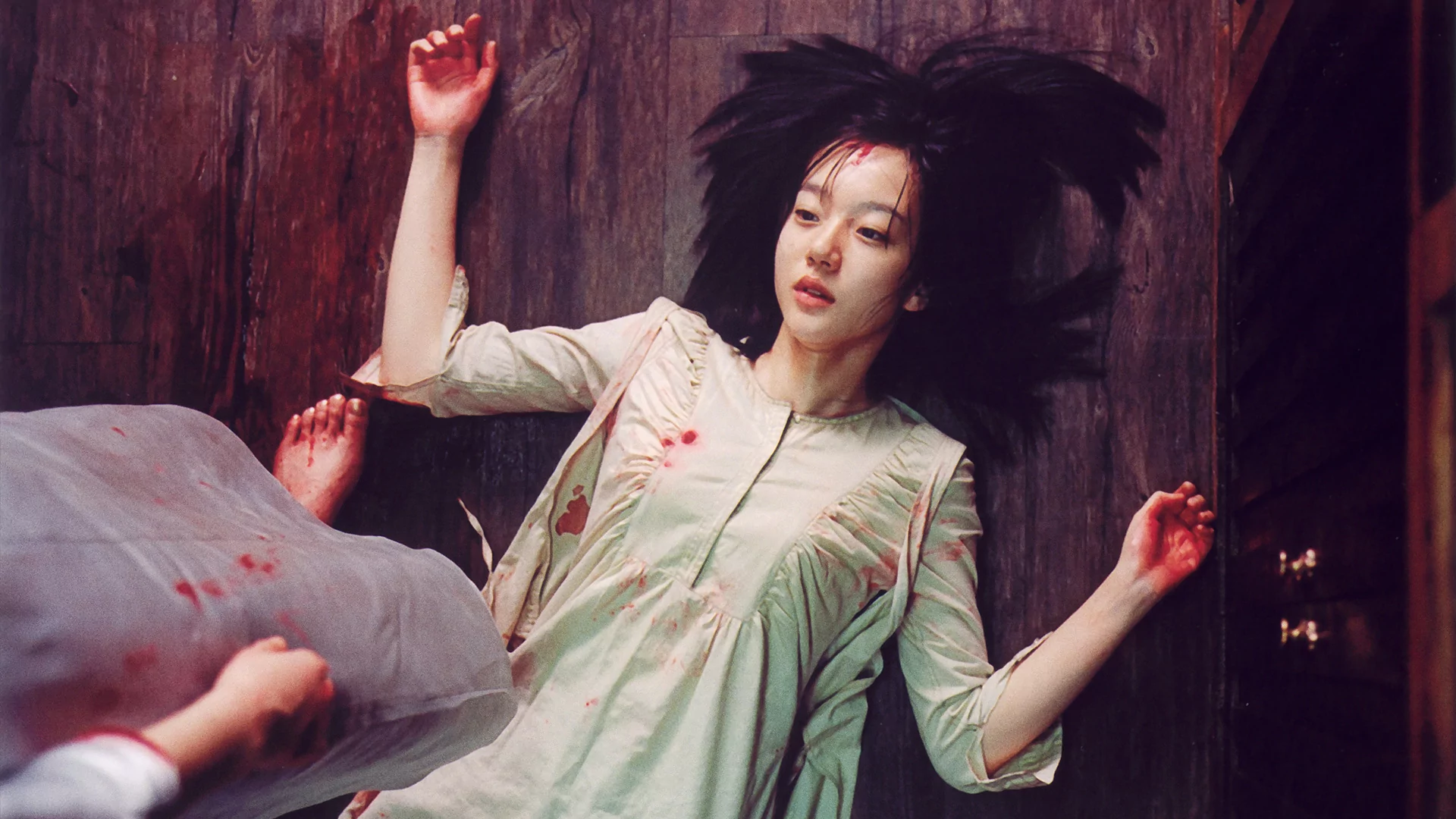
Many horror films lose their strength once you know the twist. A Tale of Two Sisters is different. In some ways, it becomes even stronger after the first watch.
The film is carefully built around atmosphere and emotional confusion. It does not rush to tell you what is happening. Instead, it lets the viewer feel trapped inside a family wound that no one wants to speak about clearly.
The house itself becomes a character. It is not ugly or obviously evil. In fact, it is often beautifully designed. The wallpaper, furniture, bedrooms, and dining room all have a polished, almost delicate look. But that beauty makes the horror worse. Everything looks controlled on the surface, while underneath, the family is falling apart.
That contrast is one of the reasons the movie still feels fresh. It does not need constant jump scares. It creates dread through mood, silence, color, and the feeling that every room is hiding something.
Su-mi Is the Heart of the Film
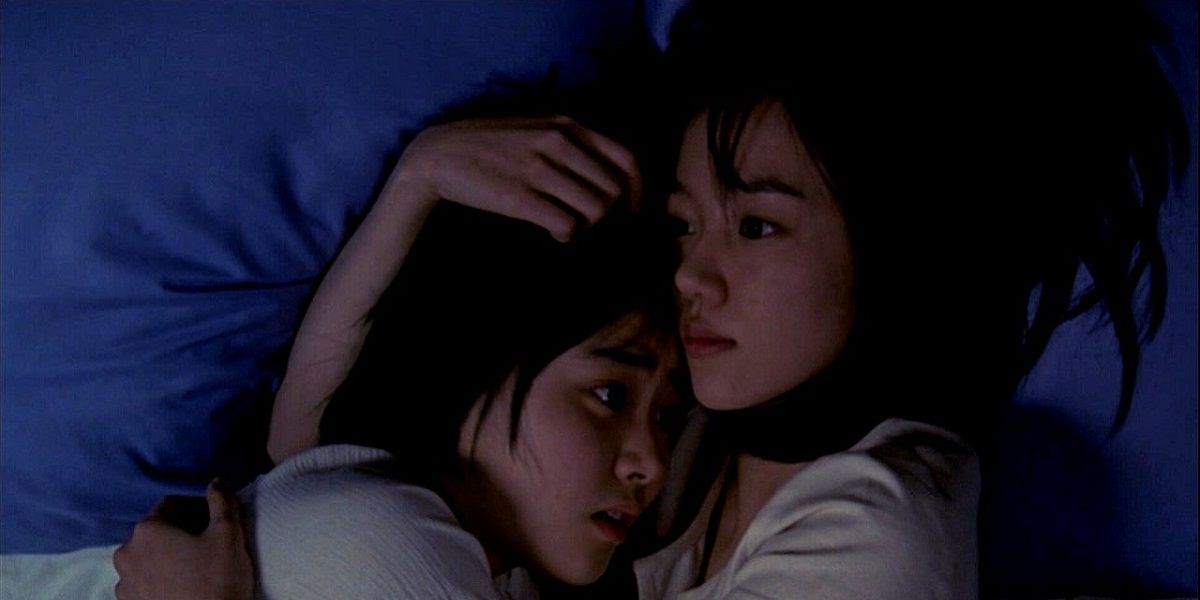
Im Soo-jung’s performance as Su-mi is one of the biggest reasons A Tale of Two Sisters works so well. Su-mi is protective, angry, fragile, and clearly carrying something too heavy for her age.
She loves her younger sister, Su-yeon, fiercely. That bond gives the movie its emotional center. Even when the plot becomes confusing, the feeling between the sisters remains clear. Su-mi wants to protect Su-yeon from the stepmother, from the house, and perhaps from something she cannot fully understand herself.
But Su-mi is also not a simple heroine. The film lets us feel her fear and anger, while slowly making us question how much of what we see can be trusted. Her perspective shapes the story, and that makes the horror more intimate. We are not watching the nightmare from outside. We are trapped inside it with her.
The Stepmother Is Unforgettable
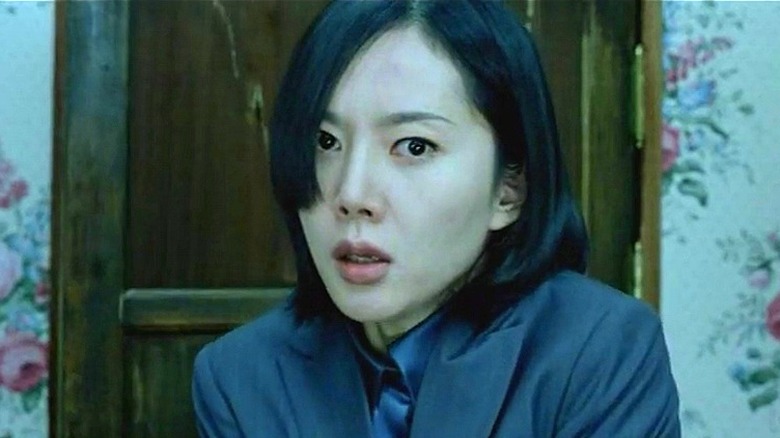
Yum Jung-ah gives one of the film’s most memorable performances as Eun-joo, the stepmother. She is elegant, sharp, theatrical, and deeply unsettling.
At first, she seems like a classic evil stepmother figure. She smiles too much. She speaks with forced sweetness. She controls the house like a queen who knows everyone else is afraid of her. Every interaction between her and Su-mi feels like a quiet battle.
But the film is smarter than a simple “bad stepmother” story. As the truth begins to shift, Eun-joo becomes more complicated. She is frightening, but she is also tied to the family’s trauma in ways that are not immediately obvious.
That is what makes her such an effective horror figure. She is not only scary because of what she does. She is scary because of what she represents: resentment, guilt, emotional replacement, and the impossibility of returning to a family that has already been broken.
Is A Tale of Two Sisters Scary?
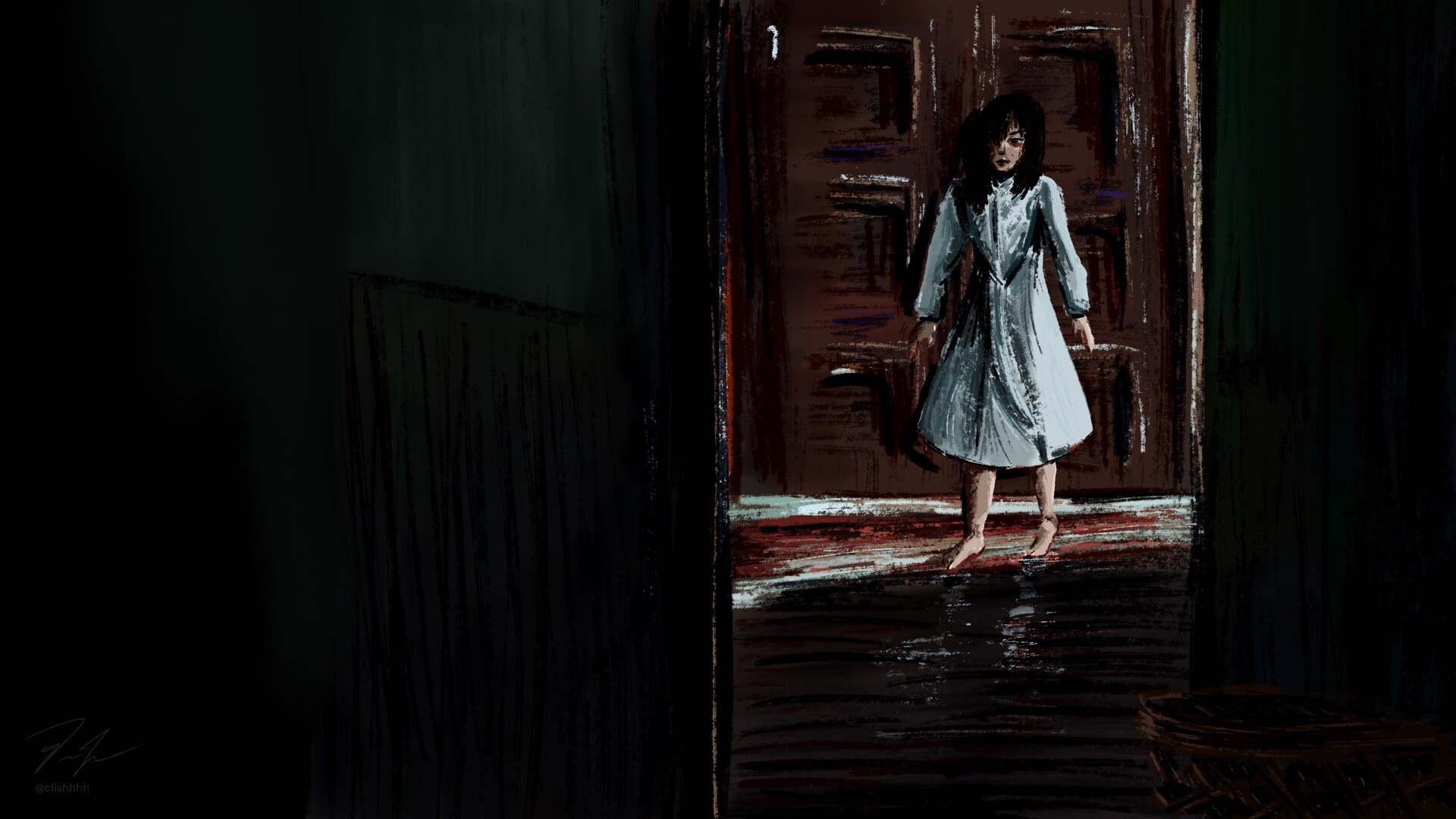
Yes, but not in the same way as a zombie movie or a violent revenge thriller.
A Tale of Two Sisters is slow-burn psychological horror. Its fear comes from atmosphere, family tension, ghostly imagery, and emotional instability. There are a few scenes that are genuinely frightening, especially the bedroom and hallway moments, but the movie’s deeper horror comes from not knowing what is real.
The film makes ordinary domestic spaces feel unsafe. A bedroom does not feel peaceful. A dinner table does not feel normal. A wardrobe does not feel like furniture anymore. Everything becomes suspicious.
That is why the movie still works so well. It understands that sometimes the most frightening place is not a graveyard or a dark forest. Sometimes it is your own home.
The Beauty of the Film Makes It More Disturbing
One thing that separates A Tale of Two Sisters from many horror films is how visually controlled it feels. Kim Jee-woon does not make the movie ugly just because it is scary. He makes it beautiful, and then lets that beauty rot.
The colors are rich but cold. The house feels elegant but suffocating. The costumes, interiors, and camera movement give the film a polished style, yet the mood is always tense.
That visual beauty matters because the story is about repression. This is a family trying to keep pain hidden under manners, silence, and appearances. The film’s style reflects that. Everything looks composed, but emotionally, everything is collapsing.
Ending Explained: What Really Happened?

Spoiler warning: this section discusses the ending of A Tale of Two Sisters.
The ending reveals that much of what we have seen has been shaped by Su-mi’s fractured mental state. Su-yeon, her younger sister, is already dead. The stepmother figure Su-mi has been fighting inside the house is not always the real Eun-joo, but part of Su-mi’s psychological breakdown.
The tragedy goes back to the death of Su-mi’s mother and Su-yeon. After their mother dies by suicide in a wardrobe, Su-yeon discovers her and becomes trapped when the wardrobe collapses on her. The real Eun-joo sees what has happened but does not save Su-yeon in time. This moment becomes the emotional wound at the center of the film.
Su-mi cannot fully accept the guilt, grief, and horror of what happened. Her mind creates a version of events where she can still protect Su-yeon and fight against Eun-joo. But the truth is far more painful: the sister she is trying to save is already gone.
That is why the twist is so devastating. It does not exist only to surprise the audience. It changes the entire emotional meaning of the film.
Why the Ending Hurts
The ending of A Tale of Two Sisters hurts because it turns the ghost story into a grief story.
At first, we think the horror is outside Su-mi. We think it is the stepmother, the house, or a supernatural presence. But by the end, the real horror is memory itself. Su-mi is haunted because she cannot escape what happened, and she cannot save the person she loved most.
This is why the film remains so powerful. It understands that grief is not always clean or logical. Sometimes the mind protects itself by reshaping reality. Sometimes guilt becomes a room you cannot leave. Sometimes a ghost is not only a dead person, but a memory that refuses to stay buried.
Themes in A Tale of Two Sisters
A Tale of Two Sisters works because its themes are deeper than the surface mystery.
Grief: The entire film is built around loss and the mind’s refusal to accept it.
Guilt: Su-mi’s pain is tied to what happened to Su-yeon and what could not be undone.
Family trauma: The house is filled with emotional damage that no one knows how to repair.
Memory: The movie constantly questions whether memory can be trusted when trauma is involved.
Female suffering: The film focuses heavily on women trapped inside domestic spaces, emotional expectations, and family roles.
The haunted home: The house is not just a location. It is a physical expression of everything the family refuses to confront.
A Tale of Two Sisters and Korean Horror Cinema
A Tale of Two Sisters is often mentioned among the best Korean horror movies because it captures so much of what makes Korean horror special. It is stylish without being empty. It is frightening without relying only on noise. It is emotional without becoming soft.
The film also helped introduce many international viewers to Korean psychological horror. Alongside movies like Train to Busan, The Wailing, The Host, and I Saw the Devil, it remains one of the essential Korean horror titles for anyone exploring the genre.
But while Train to Busan is fast, emotional, and action-heavy, A Tale of Two Sisters is quiet, strange, and tragic. It does not chase the viewer. It waits for the viewer to come closer.
That is usually when it hurts most.
Should You Watch A Tale of Two Sisters?
Yes, especially if you enjoy psychological horror, haunted-house stories, and films that leave space for interpretation.
However, this is not the best choice if you only want fast scares or simple answers. A Tale of Two Sisters is slow, layered, and emotionally heavy. It expects the audience to pay attention. It also becomes clearer after a second viewing, which is part of its lasting appeal.
Watch it for the atmosphere. Watch it for the performances. Watch it for the twist. But most of all, watch it for the sadness underneath the fear.
This is one of those horror movies that does not simply end. It lingers.
Similar Movies to Watch After A Tale of Two Sisters
If you liked A Tale of Two Sisters, you may also enjoy:
The Wailing — for a longer, darker Korean horror mystery filled with spiritual dread.
I Saw the Devil — for another Kim Jee-woon film, though much more violent and revenge-driven.
The Housemaid — for classic Korean domestic horror built around family tension and psychological collapse.
Thirst — for a stylish Korean horror film with desire, guilt, and religious conflict.
Train to Busan — for a more emotional and action-packed Korean horror experience.
FAQ About A Tale of Two Sisters
Is A Tale of Two Sisters a horror movie?
Yes. A Tale of Two Sisters is a Korean psychological horror movie with supernatural elements, family drama, mystery, and tragedy.
Is A Tale of Two Sisters very scary?
It is scary, but more atmospheric than aggressive. The film relies on dread, disturbing imagery, family tension, and psychological confusion rather than constant jump scares.
What is A Tale of Two Sisters really about?
The movie is about grief, guilt, trauma, memory, and a family tragedy that continues to haunt the people left behind.
Is A Tale of Two Sisters confusing?
It can be confusing on the first watch because the story is told through an unstable perspective. The ending helps explain what was really happening.
Is A Tale of Two Sisters worth watching?
Yes. It is widely considered one of the strongest Korean horror films and one of the best psychological horror movies from South Korea.